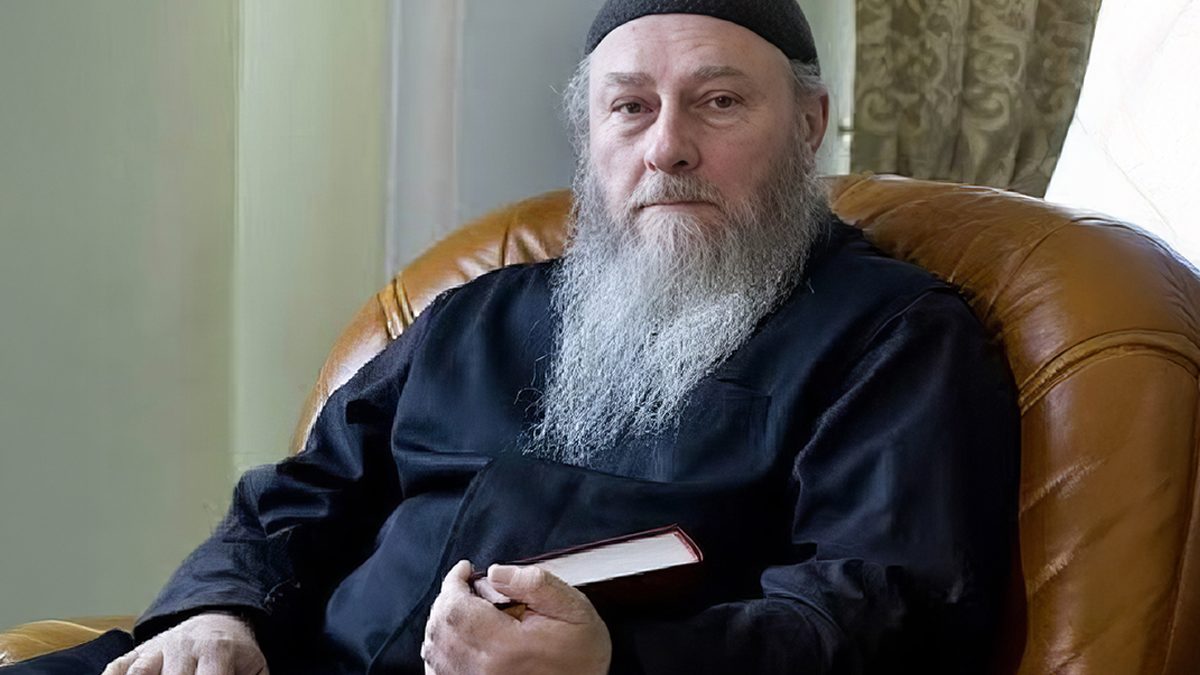
Archpriest Alexander Torik, beloved by readers across the Orthodox world, is the author of Flavian, Selaphiela, Dimon, Rusak, The Black Doe, and other novellas. In this rare interview with journalist Olga Rozhnova, he reflects on moments of Divine Providence in his life, influential people who shaped his spiritual journey, and the inspiration behind some of his most well-known literary characters.
Olga Rozhnova (OR): Divine Providence is at work in every person’s life. Sometimes it is hidden, and other times it reveals itself clearly—through signs, meaningful encounters, or timely words. Dear Father Alexander, could you share: have there been such signs in your life—clear manifestations of God’s Providence?
Alexander Torik (AT): There have been many—signs both obvious and subtle. Much of that has made its way into my books, sometimes described almost exactly as it happened, and sometimes serving as inspiration for fictional scenes. But one encounter that comes to mind right away is with the ever-memorable Father Philadelph, who reposed in the schema with the name Moses, in the Holy Trinity St. Sergius Lavra.
“You Will Be a Priest!”
In the early 1980s, my wife and I had a spiritual father—a monk (an abbot) at the Lavra in Zagorsk (now Sergiev Posad)—whom we regularly visited for confession and guidance. Like other confessors, he heard confessions in the gallery of the Gate Church of St. John the Forerunner.
At the candle counter in that church served Father Philadelph, a very striking figure. At the start of confession, he would sell candles, and during confession—which was heard by different spiritual fathers throughout the gallery—he would read the Akathist aloud in a sharp, slightly raspy voice that sounded almost like a caw, yet it was deeply prayerful, clearly from the depths of his soul.
 His tall, hunched figure reminded me of St. Seraphim of Sarov. Before coming to the monastery, Father Philadelph had been a renowned scholar, a Doctor of Technical Sciences and a professor—apparently of physics and mathematics—at one of Moscow’s well-known universities. There is a good amount of information about him online; anyone interested can look him up by searching “Hieromonk Philadelph (Bogolyubov)” or “Schema-monk Moses (Bogolyubov)” (1915–1992).
Around 1985 or 1986, when I was serving as a choir director in a rural church, I once again met Father Philadelph at the Gate Church. I approached him, palms together as is proper, and asked for his blessing. He usually walked with his eyes lowered due to his stooped back and humble heart, but he lifted his head slightly, raised his blessing hand with the proper finger configuration, then suddenly paused, looked at me with some surprise, and said:
“Wait—you’re a priest!” (As is customary, those of equal rank do not bless one another.)
Surprised and flustered, I tried to explain that I was only a choir director and hadn’t even thought about priesthood (which was true at the time). He looked at me a little skeptically, gave me his blessing anyway, and continued on his way.
A similar thing happened in 1990. I was a deacon by then and had come to see my spiritual father. Again I met Father Philadelph at the Lavra. Again he said, “You’re a priest!” I replied, “No, Father, I’m a sinful deacon.” He said, “Strange… but I see you as a priest.”
A year later, when I was facing the decision to pursue priesthood, I went to my spiritual father for a blessing—and thought to also ask Father Philadelph to pray for me before I took that fearful and sacred step.
I climbed up to the gallery and got in line for confession. Meanwhile, I went over to the candle counter. Father Philadelph was there—older, even more hunched—sorting candles by size into boxes. I leaned in and said, “Father! Bless me! Pray for me, the sinful Deacon Alexander—I’ve come to receive a blessing to be ordained a priest.”
He turned his head and looked at me with an expression I will never forget—the loving gaze of a kind grandfather looking at his dearest grandson. And he said:
“My child! Do you know what this cross is that you wish to take up?” He touched the priestly cross hanging on his chest. “See? I wear it. But many times I’ve thought—wouldn’t it have been better if I had remained a deacon? You will be a priest—but remember two cities: Capernaum and Nazareth. In Nazareth, they didn’t accept the Lord’s preaching—they wanted to throw Him off a cliff—and the city still stands today. But in Capernaum, where He worked many miracles, the people didn’t believe. To this day, scholars debate where it even stood—nothing remains of it! To whom much is given, much will be required! Go—you will be a priest—but remember those two cities!”
I do remember—and I tremble, thinking about that “will be required.” My only hope is in God’s infinite mercy and in the prayers of the righteous, including Father Philadelph-Moses.
Encounters That Shaped a Life
OR: Father Alexander, in one of your recollections you said: “I received a great spiritual inheritance from Novodevichy Monastery—encounters with remarkable church people, some of whom later played important roles in the life of the Church.” Could you share more about some of these people?
 AT: I’ll keep silent about those who are still alive and now play a prominent role in Church life. But there are a few I always remember with love and warmth. I’ll name three: Protodeacon Sergey Strigunov, and nuns Eupraxia and Anna.
Father Sergey was a striking figure—he was the Metropolitan’s protodeacon—with a gorgeous bass-baritone voice that I first heard on a record commemorating the 600th anniversary of the Battle of Kulikovo, where he served a memorial service. I still hear his “Memory Eternal” in my ears. He was the one who inspired me to dream of being a deacon and of such beautiful, dignified service.
He also was the one who led me around the altar when, in 1989, I was ordained a deacon in the Dormition Church of the Novodevichy Monastery. For two years, we served together in various places. He was my first mentor in diaconal ministry.
He passed away young (at 61), but peacefully—after an illness, having reconciled with everyone, been anointed, and received communion, prayerfully awaiting his meeting with the Lord. I love him and pray for him and will never forget his Muscovite accent: “Sasha! Read the red! Not just the black—read the red, I’m telling you!” (In the service book, black text is for prayers, red for rubrics.) Kingdom of Heaven to you, Father Sergey!
Nun Eupraxia was the sacristan at the Dormition Church, which at that time was still just a parish church (the monastery was a branch of the State Historical Museum). She was always strict, few in words, prayerful, and full of deep love for God and people.
Once, at the beginning of my diaconal service, I accidentally saw her hidden in a corner of the sacristy, kneeling in prayer behind the vestments. I was struck by the fervency of her prayer, and that image has never left me. That’s how the saints pray.
Nun Anna worked as the prosphora baker at the same church. She was round, good-natured, and you could feel love radiating from her. Back when I was still a layman and an artist, having gotten a glimpse behind the curtain of church life and been shocked by what I saw, I asked her, “Mother! Aren’t you church people supposed to be saints? But look at what’s going on here!” I told her what I had seen (this was in the 1980s, when the KGB was still trying to undermine the Church through their “agents of influence”).
She looked at me with a mother’s love and said, “Son! There’s a spiritual war going on—against Christ and against His Church. And we, the ‘church people,’ are Christ’s soldiers. In every war, the enemy aims at the officers, not just the foot soldiers. That’s why the attack is fiercer against clergy than against laypeople. Only someone who has experienced this spiritual warfare can truly understand it. So don’t judge us ‘church people’—pray for us. And we, as best we can, will fight for you laypeople from the front lines.”
Kingdom of Heaven to Nun Anna! I’ve now felt this “war against the clergy” on myself for over forty years…
OR: Father Alexander, could you tell us: who among the people you’ve met in your life has had the greatest spiritual influence on you?
AT: Grandma Shura, Andrei Stamboli, Father Alexei Polikarpov, Father Vasily Vladyshesky, Father Iliy (Nozdrin), Father Nikolai Guryanov, Father Joachim from the Skete of St. Anna on Mount Athos, Father Dionysios Kalambokas, Monk Hermolaus from St. Panteleimon Monastery on Athos… and many other wonderful priests, monks, and laypeople.
The Real Father Flavian?
 OR: You’ve written that the image of Father Vasily Vladyshesky became the basis for your main character, Hieromonk Flavian. Could you tell us more about Father Vasily? What role did he play in your spiritual life? What does he share with Father Flavian, and what sets them apart?
AT: If you search online for “Archpriest Alexander Torik ‘Zvonky Alyosha’,” you’ll find a chapter from my book When I Depart Forever, dedicated to the memory of the slain priest Alexei Grachev and archdeacon Roman Tamberg. In the chapter “Zvonky Alyosha,” I describe Father Vasily Vladyshesky and the atmosphere of his parish in detail. Read it and compare with Flavian—the similarities and differences will be clear.
Final Reflections
OR: Which of your books is your personal favorite, and why?
AT: As of today, probably The Black Doe. I was able to include so much of what I consider most important.
OR: Could you share what you’re working on right now, how your writing is going?
AT: I’m slowly working on a new book titled Flavian: The Diary. As much as my health allows, I also participate in the church life of the International Christian Spiritual-Cultural Center “Pokrov” in Albufeira.
(Interview conducted by Olga Rozhnova, originally published in Russian on September 5, 2019. Translated by Alpha Omega Press. Read Part 2 of this interview here.)